
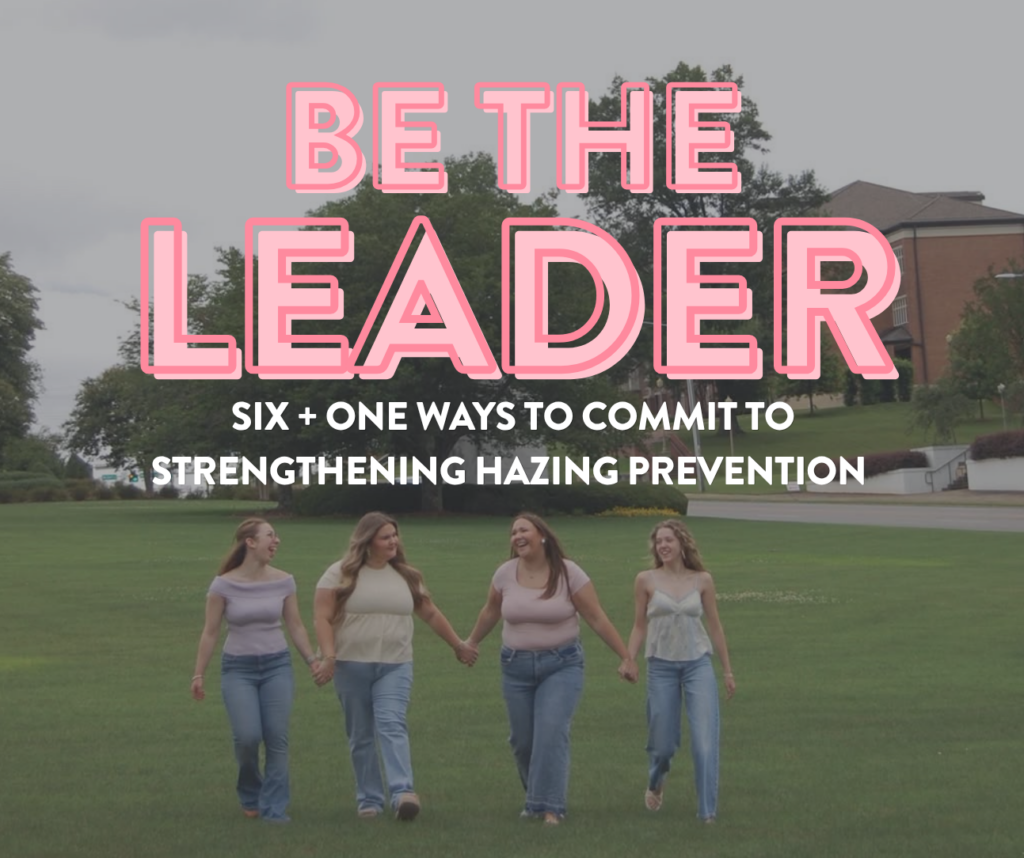
National Hazing Prevention Week takes place September 21-25, 2026, offering members, volunteers and leaders an opportunity to think not only about what hazing looks like, but also about what healthy leadership and belonging should look like instead.
This year’s theme “Be the leader. Prevent hazing.” reinforces an important idea: leadership plays a role in shaping the experiences, expectations and traditions within every group. Every member influences what is considered normal, how others are treated and whether people feel comfortable speaking up.
Take a moment to reflect on these six ways to strengthen hazing prevention in your chapter, plus one commitment to carry forward after National Hazing Prevention Week has ended.
1. Recognize That Hazing Does Not Always Look Extreme
When people hear the word “hazing,” they may immediately think of dangerous or highly visible behaviors. But unhealthy group dynamics can begin much earlier. StopHazing’s Spectrum of Hazing™ identifies behaviors across intimidation, harassment and violence categories. Some behaviors may be harder to recognize as hazing, making it especially important to pay attention to expectations that create pressure, humiliation, isolation or fear.
Ask:
- Does this activity create connection or pressure?
- Could someone comfortably say no?
- Is someone being treated differently because of their membership status?
- Would we be comfortable explaining this activity to an advisor, family member or campus professional?
Prevention begins with recognizing when something does not align with the experience we want to create.
2. Pay Attention to Group Culture – One useful prevention question is “are we creating a healthy group?”
Healthy groups respect boundaries, welcome questions and allow members to disagree without fear of exclusion or retaliation. They also support members in maintaining relationships, responsibilities and identities outside the organization. Unhealthy group behaviors are not always hazing, but they can be warning signs that deserve attention.
Chapter culture develops through everyday interactions. Leaders can help make those interactions intentional, respectful and supportive.
3. Question Traditions With Purpose
Traditions can create connection and shared memories, but longevity alone does not make an activity meaningful or appropriate. Strong leaders are willing to ask why an activity exists and whether it still serves its intended purpose.
Before continuing a tradition, consider:
- What are members supposed to gain from this experience?
- Does it strengthen belonging?
- Does it reflect our shared values?
- Could the same goal be accomplished in a healthier or more inclusive way? Changing a tradition does not erase a chapter’s history. Sometimes, change helps ensure that traditions continue to reflect the organization we want to be.
4. Make It Easier to Speak Up
Speaking up is easier when members know their concerns will be heard and taken seriously. Leaders can help by creating clear, consistent opportunities for members to ask questions or raise concerns.
A few practical ways to do that include:
- Regularly remind members how and where to share concerns.
- Invite questions before and after chapter activities.
- Thank members who raise concerns, even when more information is needed.
- Avoid dismissive responses such as “It’s not a big deal” or “You’re overreacting.”
- Follow up so members know their concern was not ignored.
How leaders respond in these moments helps shape whether others will feel comfortable speaking up in the future.
5. Practice How You Will Respond
Recognizing a concerning situation and knowing how to respond are different skills. Bystander intervention helps members prepare before they are faced with a difficult moment. Depending on the situation, someone might:
- Ask a question or address the behavior directly when it is safe.
- Check in privately with someone who may be affected.
- Redirect or interrupt an activity.
- Ask another member, officer, advisor or campus professional for help.
- Report a concern through the appropriate organizational or campus process.
There may not be one perfect response for every situation. What matters is moving from noticing a concern to taking action.
6. Design Experiences That Create Real Belonging
Hazing prevention is not only about removing harmful activities. It is also about intentionally creating healthier ones. When planning new member, sisterhood or chapter activities, start with the experience you want members to have.
Do you want members to build friendships? Learn something new? Feel connected to the chapter? Develop confidence? Understand Delta Zeta’s values?
Once the goal is clear, choose activities that support it without requiring members to prove their commitment, endure discomfort or participate because they fear being left out.
Belonging is strongest when members are valued for who they are, not for what they are willing to endure.
+1. Commit to Hazing Prevention Beyond One Week
National Hazing Prevention Week creates an important opportunity for education and conversation, but strong cultures are built throughout the year.
Choose one action to carry forward:
- Review a chapter tradition.
- Talk about healthy group expectations.
- Practice a bystander scenario.
- Revisit reporting resources.
- Ask members what helps them feel comfortable speaking up.
- Include prevention conversations when new activities are planned.
Small actions, repeated consistently, help shape culture. This week and throughout the year, be curious enough to question, confident enough to speak up and thoughtful enough.
Related Posts
New Delta Zeta Foundation Support for Lifelong Learners
Delta Zeta Foundation awards first ever Continuing Education and Certification Grants. Delta Zeta women pursue personal and professional growth throughout their lives and careers. The Delta Zeta Foundation is now proud to offer financial support for alumnae who have invested in their own development through training programs, professional certifications and other educational pursuits beyond traditional graduate degree programs. Continuing Education…
Join us for the Houston Everlasting Reunion: June 13, 2026
Following last year’s Everlasting Houston event, we’re bringing Houston-area Delta Zeta members back together on Saturday, June 13, 2026, at Topgolf Houston-Katy. Join sisters from across the area for a casual afternoon to reconnect and to have some golf-themed fun. Register here by May 29, 2026. Bring a future Delta Zeta sister with you! Do you know someone who may be interested…
Everlasting Charlotte Reunion 2026
Charlotte-area Delta Zeta members, join us to spend the day together at the Whitewater Center on Saturday, May 30, 2026! Building on last year’s successful Everlasting Charlotte event, the day will include lunch and a conversation with Christy Phillips-Brown, Theta Iota, Western Carolina University, Past National President. You also have the option to join a Turtle Talk or take part in one of the outdoor activities…